Appliance and Supply Line Leaks in Federal Way, WA
A burst washer hose or a cracked fridge line keeps running until someone notices. The extraction crew removes the water, and the drying team dries the floor, cabinets and walls around the appliance.
(888) 509-1696Dry the appliance leak before it spreads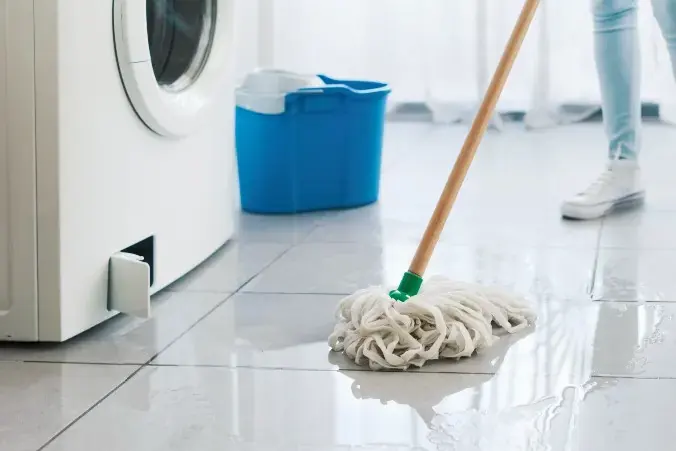
What to do when an appliance line fails in Federal Way
- Close the appliance valve Or shut the main if you cannot reach it.
- Unplug the appliance Only if the outlet and floor are dry.
- Pull out what you can Towels, rugs and boxes off the wet floor.
- Keep the failed hose It shows the cause for the claim file.
What does appliance and supply line leaks cost in Federal Way, WA?
In Federal Way, WA, appliance and supply line leak cleanup typically runs $900 to $5,000. The range depends on how long the line ran, whether water got under cabinets and flooring, whether it reached a lower floor and how fast drying started.
Caught quickly
- Extraction
- Floor drying
- Moisture readings
Under cabinets and flooring
- Toe kick removal
- Cabinet drying
- Plank removal if needed
Reached a lower floor
- Ceiling drying below
- Several rooms
- Full documentation
For a planning range on your own loss, try the water damage cost calculator. The restoration contractor who responds sets the real scope after the moisture map.
Rubber washing machine hoses, plastic ice-maker lines and braided toilet supply lines all wear out. When one bursts it can release several gallons a minute, and a slow drip behind a dishwasher can soak a subfloor for weeks before it shows. In Federal Way apartments and townhomes, the laundry closet often sits over someone else's ceiling.
The usual suspects
- Washing machine fill hoses, especially rubber ones
- Dishwasher supply and drain connections
- Refrigerator ice-maker and water dispenser lines
- Toilet and sink supply lines
How an appliance leak is dried
The extraction crew removes standing water, then the tech who does the walkthrough checks under cabinets, toe kicks and flooring with pinless meters, because that is where the water hides. The drying team pulls toe kicks or drills small holes to push air under cabinets, and sets air movers and dehumidifiers for the floor and walls. Laminate and vinyl plank often trap water underneath and may need to come up.
Line burst behind an appliance? Close its valve or shut the main.
Call about an appliance leak, (888) 509-1696Preventing the next one
Braided stainless hoses, replaced every five years or so, leak sensors under the washer and dishwasher, and a look behind the fridge once a year catch most failures early. EPA WaterSense leak checks explain how to spot hidden leaks, and EPA guidance on moisture and mold explains why a slow leak under a cabinet should be dried quickly. For a toilet or drain backup see sewage backup cleanup; for a failed tank see water heater failure cleanup.
The appliance leak cleanup process in Federal Way, WA
- 1
Moisture mapping
The tech who does the walkthrough maps wet materials with pinless meters and a thermal camera before any equipment goes down.
- 2
Extraction
The extraction crew pulls standing water with truck-mounted units, so it leaves the building instead of soaking the next room.
- 3
Air movers and LGR
Air movers go in at each room's evaporation load while LGR dehumidifiers pull that moisture back out of the air.
- 4
Dry verification
The drying team logs readings daily and pulls equipment only when materials sit within the IICRC S500 drying goal.
Appliance and Supply Line Leaks across Federal Way
The restoration team covers Federal Way ZIPs 98003 and 98023, from City Center and Steel Lake to Twin Lakes, Dash Point and Redondo, plus Des Moines, Kent, Auburn, Milton and Northeast Tacoma. Every neighborhood and ZIP
Related water damage services
Appliance and Supply Line Leaks questions in Federal Way, WA
How often should washing machine hoses be replaced?
About every five years, sooner for rubber hoses. Braided stainless hoses last longer.
Can cabinets be dried without removing them?
Often. Removing the toe kick and pushing air underneath dries most cabinet bases.
Why is my laminate floor swelling?
Water trapped under laminate swells the core. Swollen boards usually need to be replaced.
Is an appliance leak covered by insurance?
A sudden burst is often covered. Long, slow leaks may not be. Coverage depends on your policy, so it is worth checking with your own insurer.
Is washing machine water clean?
Supply water is Category 1. Drain or discharge water from a washer or dishwasher is Category 2.
How long does drying take?
Most appliance leaks dry in two to four days once the water is found and extracted.
Appliance and Supply Line Leaks in Federal Way, any hour
Water keeps moving into drywall, pad and framing until someone pulls it out. The Federal Way restoration crew extracts, dries to the S500 goal and documents the loss.
- Federal Way, WA and south King County
- Open around the clock